Table Of Content
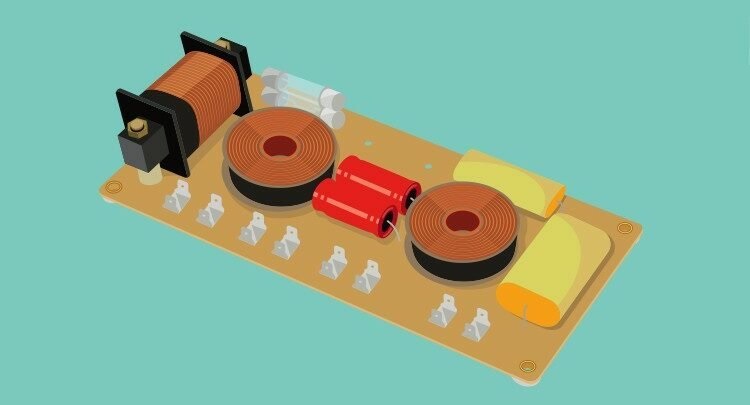
Generally, the lowfrequency driver does not require too much response shaping so the criticalmidrange must have enough sensitivity headroom to allow for response manipulationif needed. Finding the right combinationof woofer and midrange is critical and it is very important to know a fewthings here. For the purposes of thisarticle, I’m going to walk you through one of my Do-It-Yourself speaker designsto give you an idea of what is involved and what I have learned so far. Please note that the project covered heredoes not represent a great value but is meant to show the process of designinga loudspeaker for yourself. After a few good books and abit of forum surfing, I decided to jump into a much simpler 2-waymid-tweeter-mid design using pretty inexpensive drivers.
Loudspeaker engineering : How to design speaker crossovers
The good news is it won’t be very hard – you don’t have to do the math yourself unless you prefer to. You can use my speaker crossover calculator to give you the part values you need. The Linkwitz-Riley (L-R) crossover is an excellent choice for building a standard speaker design with its -12dB per octave slope and good (flat) output. But some tower speakers, such as our Best Dolby Atmos pick, feature built-in speakers on top that bounce sound off the ceiling and back down to the listener.
Fully-Finished or DIY Speaker Kits
It is called "passive" as there is no additional power source required by the speaker. Tower speakers are prized for their powerful sound and excellent stereo imaging for music and movies, which can provide a more immersive and powerful performance than most smaller speakers. Because they generally have larger drivers seated in bigger cabinets, they’re also able to reproduce more convincing bass and lower mid-range frequencies than smaller speakers.
Example of a finished DIY speaker crossover
To efficiently reproduce low frequencies, a large volume of air must be moved. This requires a speaker with a large diaphragm area and long diaphragm excursion. In other words, low frequency drivers are large speakers capable of large movements.
Reversing out of phase speakers for even-order designs
This small project taught me a few lessons Ihope you will not have to learn the hard way. For reference, a 3db increase is twice as loud and requires twice as muchamplifier power to create this increase. 2x power for3db, 4x power for 6db, 8x power for 9db, 16x power for 12db... Low pass filters allow low frequencies to pass while attenuating, or reducing, higher frequencies.
Prepare the crossover circuit & components for assembly
For sealed loudspeakers, connect the wooferto the binding post as this is the first driver measured in the cabinet. Using SoundEasy, each driver is measured inthe cabinet to obtain frequency response and electrical impedance. These parameters are obtained following thetest methodology outlined in our LoudspeakerMeasurement Standard. Pleasenote that any measurements taken near field must factor in the effects ofbaffle diffraction.

B/Octave Slope
Sensitivity measures how efficiently a speaker can convert power into sound measured in decibels, which pertains to loudness. You can get a general idea of a speaker’s baseline performance from the specifications found on most audio gear. To reduce the risk of injury and equipment damage, it’s essential to use the correct tools and follow established safety protocols when soldering components.

Choosing your crossover design type and related details
Using cheapelectrolytic capacitors this crossover costs close to $150 for componentsalone. Having the world’s best drivers with a poorcrossover design will yield poor results. It is important to approach crossoverdesign with humility because it truly is an art that requires experience toperfect. Yes, it is possible to get decentsound by sending driver data sheets off for a generic crossover design. However, without proper analysis of thedrivers in the intended cabinet it is a game of roulette.
Phase is the timing of a signal, and the shift is the degree of the delay that occurs onthe signal when passed through a crossover. If 2 speakersare 180 degrees out of phase then they will cancel each other wherever they producethe same frequencies. Even with crossovers, both speakers will produce sound forseveral octaves beyond the crossover point. If this problem occurs, there will bea noticeable dip in the frequency response at the crossover point.
Monoprice Monolith Encore T6 Tower Loudspeaker Review - Audioholics
Monoprice Monolith Encore T6 Tower Loudspeaker Review.
Posted: Wed, 13 Apr 2022 07:00:00 GMT [source]
When building a speaker crossover and using a 2nd order or other even-order designs, it’s important to remember to reverse one speaker driver to correct the 180 degree out of phase condition. The best alternative may be towind your own inductor coils using the Inductor Calculator.Start large and then unwind (but don't cut) the inductor to experiment with different values. Although the diagrams in this document show each of the high speakers being run throughmultiple high pass filters, this is not necessary.
We’ve gathered the best models in a wide range of price points and styles to help you find the perfect pair that will take your home theater setup to the next level. Unfortunately, the tweeter used in this design did not measure close tothe data sheet at all and required pushing the crossover frequency up. Ultimately the dip at 4kHz is fixable but thecost required outweighs the benefit. Now that a suitable lowfrequency driver has been selected, it is typical to find a midrange that ismore sensitive.
As a result a ladder delay network needs to be implemented and it will increase the cost of the crossover by quite some margin. I’m looking to keep the crossover price down, so I’m happy with just the flat response. Linkwitz-Riley designs are hands-down one of the most commonly used for a number of reasons, one of which is their flat response where the woofer and tweeter crossover points overlap. While it’s true that plenty of other designs exist (Butterworth, Chebychev, Bessel, and others) they do not offer the same frequency response. The Fs is at 1000Hz, and thecrossover point is at 3000Hz with a 3rd order crossover.
Most of the time, three-way speaker systems will offer better overall definition and performance, especially in the bass. There are exceptions, but you should generally look for a three-way system when you can. Inductors becomemore reactive (increasing AC resistance) as the frequency increases, and thus lowerthe sound pressure on the driver more and more as the frequency increase.
The choice of crossover frequency depends on the drivers you're using and their frequency response. It's generally a good idea to consult the speaker's specifications and possibly do some listening tests. This example was relatively simple, but for higher-order crossovers, this crossover calculator makes it a breeze to work out which components you need to build your custom speaker design.


No comments:
Post a Comment